

Lot 31


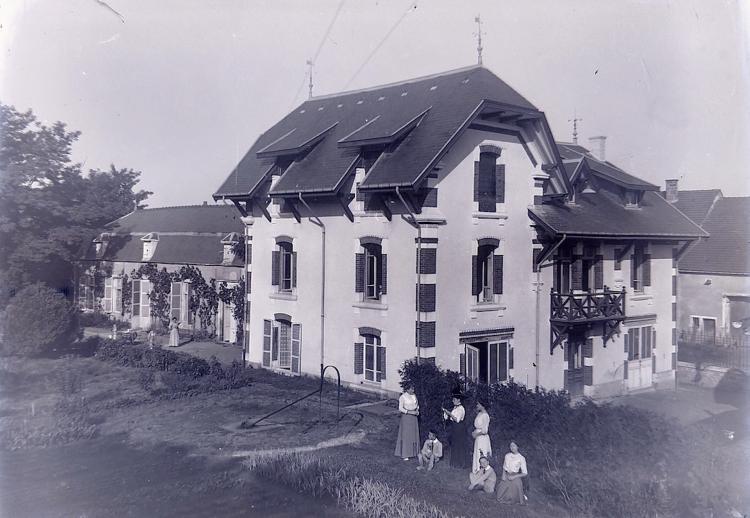

Rare glass plate negative from a fine collection in Paris, France. The plate dimensions are 7" x 5" or 18cm x 13cm.
- Provenance: Fine estate in Paris, France.
- Literature: How Glass Plate Negatives were made. Basic Photography: Most photographic images are composed of two parts, the base and the light sensitive emulsion. The base, whether metal, glass, paper or film, provides support for the thin emulsion layer. Over the years various chemical compositions have been used for the emulsion, including collodion and gelatin. Embedded into the emulsion are light-sensitive chemicals, usually silver nitrate. The photographer places the “base/emulsion piece” (for example, a strip of film or a glass plate) into the camera, opens the camera’s shutter for a predetermined length of time, and exposes the piece to the light thus causing a chemical reaction that captures the desired image. The photographer then develops the piece in another chemical solution to fix the image in the emulsion. From this the photographer can print out the image on photographic paper creating what we call a photograph. Source: Britannica Online Collodion Wet Plate Photography This early photographic technique invented in 1851 consisted of spreading collodion, a flammable liquid comprising cellulose nitrate and ether among other ingredients, onto a glass plate. The plate was plunged into a bath of silver nitrate, which turned the collodion into photosensitive silver iodide. The wet plate was then exposed in a camera and developed in a darkroom or developing tent. This process allowed identical prints to be made in quantities, but the exposure had to be completed before the collodion dried (about five minutes on a warm day) and necessitated the presence of a darkroom wherever a photograph was to be made. Sources: Britannica Online, “Glass Plate Negatives” by Stuart Vail, and “Format Preservation Fact Sheet” by Gene Polhamus. Gelatin Dry Plate Photography The development of a process in 1871, in which an emulsion could be dried on a plate and stored for months before use, revolutionized the world of photography. Gelatin dry plates were commercially produced and came ready to use. The photographer did not have to treat the glass, just expose it to light and develop it. Because the plates were manufactured, the edges of the glass were smooth, the emulsion was even, and the sizes were more regular. The silver nitrates were evenly distributed in the gelatin emulsion and were more sensitive to light, producing a negative with sharper contrasts than the collodion wet plates. Not only did it eliminate messy and potentially explosive chemistry from the practice of photography, it also allowed local photographers like Harry Rood and Leon Dewey to capture images in the field and store them for years. The gelatin dry plate negative was widely used from 1880 until the late 1920’s when it was surpassed in both ease and popularity by the gelatin silver negative on celluloid roll film. Sources: Britannica Online, “Glass Plate Negatives” by Stuart Vail, and “Format Preservation Fact Sheet” by Gene Polhamus.
- Condition: This is an authentic old item and it is likely not in perfect condition. Please, see the included pictures. A scanner may "see" a image differently than human eyes will, so it is possible that the actual image may be slightly darker or lighter in person.
Accepted Forms of Payment:
American Express, COD (cash on delivery), Discover, MasterCard, Money Order / Cashiers Check, Paypal, Personal Check, Visa, Wire Transfer
Shipping
We mainly ship via USPS Priority or First Class.
-Only small lot(s) could be H&S directly from Artelisted via USPS into the USA. Note that the insurance is not included (contact us if you desire insurance).
-Large items might be coordinated with a private shipper. You can research shipper companies. Our Zip Code 33428. Artelisted will keep the option to don't deliver large staff. We can help coordinating the staff to a another shipper. Buyer will pay handling, shipping, and insurance (if desired) costs. Shipping costs depends on final destination.
Sometimes the items are in the owner possession. In this case the shipping will be from a third party delivery.
In this case as a trusted third-party Artelisted collects, holds in an escrow account)and disperses payments once buyers and sellers are satisfied.
STEP 1
Final costs are calculated (including shipping), and the buyer submits payment through Paypal, Credit Card, or Wire Transfer.
STEP 2
After the payment is verified, the seller sends the painting within ten days. Artelisted ensures that paintings are sent with a tracking number. Insurance is purchased at the cost and discretion of the seller.
STEP 3
Enjoy your artwork.
If you are discontent you have five days, from the confirmed shipping delivery date, to send an email to [email protected]. If you choose to return the painting, you the buyer, will be responsible for shipping and shipping insurance costs.
Artelisted
View full terms and conditions
| From: | To: | Increments: |
|---|---|---|
| $0 | $4 | $1 |
| $5 | $19 | $2 |
| $20 | $49 | $3 |
| $50 | $99 | $5 |
| $100 | $199 | $10 |
| $200 | $499 | $20 |
| $500 | $999 | $50 |
| $1,000 | $4,999 | $100 |
| $5,000 + | $200 |